Luoping: The Earth’s Golden Veins and the Harvest of Time
When people speak of Yunnan, their minds often drift to the romance of Dali’s lakes or the mysteries of tropical rainforests. But in Luoping, in the province’s eastern reaches, the earth reveals a different spirit—a raw, overwhelming, and boundless passion.
As a dedicated stop in the Osemise map for exploring natural intensity, Luoping refuses to be defined merely as a “flower-viewing destination.”
Every early spring, the sunlight near the Tropic of Cancer catalyzes a grand, golden effervescence. Here, the Karst peaks are no longer cold stones; they are living coordinates rising from a million-acre sea of blossoms.
We invite you to bypass the crowded observation decks and truly plant your feet in the soil—to breathe in the intoxicatingly thick scent of nectar and feel the icy mist of waterfalls crashing against ancient rock. This is more than a visual feast; it is an immersion into the very heartbeat of the earth, reminding us how full and vibrant life was always meant to be.
Meet Luoping
Where it is:
Luoping is located in eastern Yunnan, China, roughly 250 km southeast of Kunming. It’s famous for its vast canola flower fields in spring, rolling hills, rivers, and rural landscapes, offering a colorful and immersive countryside experience.
Altitude:
The county lies around 1,100–1,800 meters above sea level, giving it a subtropical highland climate ideal for agriculture and outdoor exploration.
Weather:
Mild and pleasant most of the year. Spring and autumn temperatures range from 15–25°C, summer 20–30°C, and winter 8–18°C. The rainy season occurs mainly from June to August, while the rest of the year is drier with abundant sunshine.
People & Language:
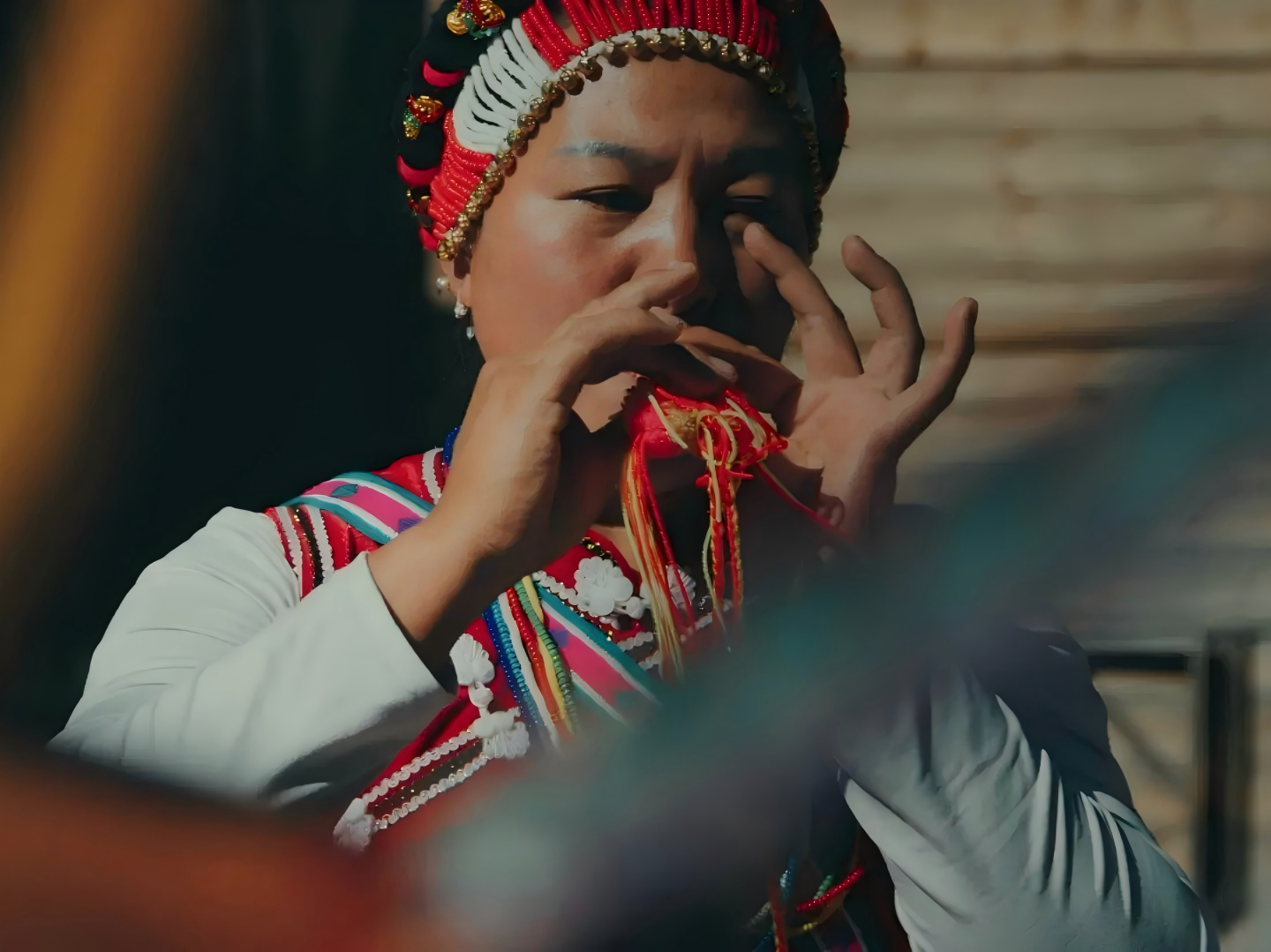
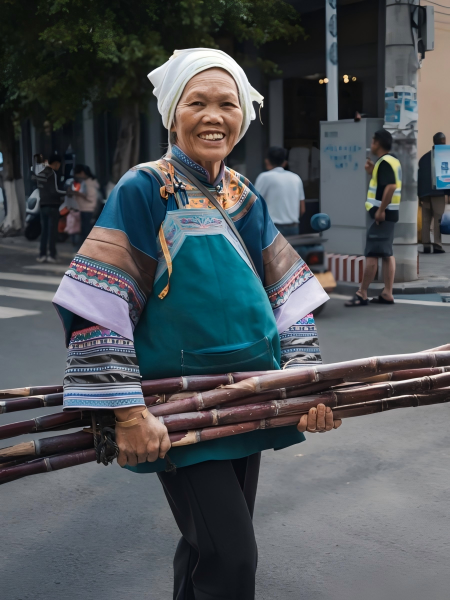
Population is roughly 500,000–600,000, including Han, Yi, Miao, and other ethnic groups. Mandarin is common, and local ethnic languages and traditions remain strong, especially in village life and festivals.
Getting Around:
Luoping can be reached from Kunming by bus or private car. Local roads, taxis, and motorcycles are commonly used to explore flower fields, rural villages, and scenic viewpoints.
Tips for Your Visit:
Best time: February–April, when canola flowers bloom across the hills. Take time to wander the countryside, enjoy the colorful landscapes, and observe local village life. Respect local customs and enjoy the gentle pace of rural Yunnan.
 Breaking away from the monotonous “Instagrammable” angles, we take you deep into the heart of this golden wilderness.
Every February and March, the rapeseed blossoms spill across the Karst basin like liquid sunlight. As you wander along narrow ridges through waist-high fields, the brilliant colors and dew-damp fragrance wrap around you completely.
Amidst the rhythmic hum of wings, you will encounter the nomadic beekeepers who live following the bloom. Pause a moment to taste a spoonful of wild honey, still warm from the hive. That intense, pure sweetness glides from your tongue straight to your soul.
Here, the peaks rising like spring shoots are not a distant backdrop; they are silent witnesses of a million years, standing right beside you. This is a spring that belongs entirely to your senses of smell, taste, and touch—too vivid to be resisted.
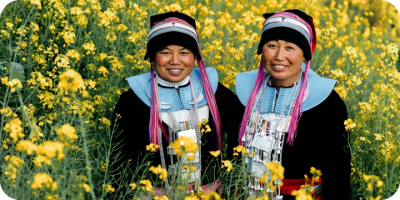 Unlike the grand scale of the plains, the “Snail Fields” of Niujie possess an exquisite sense of order and restraint.
Following the natural contours of the valley, the golden blossoms and emerald wheat intertwine like ripples on water—or like a giant fingerprint slowly etched into the earth by the passage of time.
An Osemise guide will not merely leave you at a distance to look down from above. We will lead you down the curving paths between the fields.
Watch how the morning mist rises breath-by-breath from the valley floor, and see how the farmers sow and weed within these near-perfect arcs. Here, you witness more than a geological wonder; you see the ultimate wisdom of the local people who worked with the grain of nature, turning the toil of survival into a masterpiece of art.
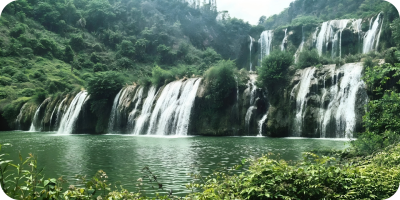 Please close your eyes and let your sense of hearing take the lead on this part of the journey.
Even before the waterfalls reveal themselves, a deep, thundering roar—like ten thousand galloping horses—pierces through the forest and vibrates against your eardrums. Ten cascades of varying sizes tear the tranquil river into countless roaring white dragons.
When you stand before the deep plunge pool, bathed in flying mist, the icy spray rushes over your face, and you can even feel the faint trembling of the rocks beneath your feet.
This is no static landscape; it is an endless, relentless wrestling match between water and stone. We pause on a secluded path tracing the water’s edge, letting the raw, untamed power of nature wash away all the numbness and exhaustion of urban life.
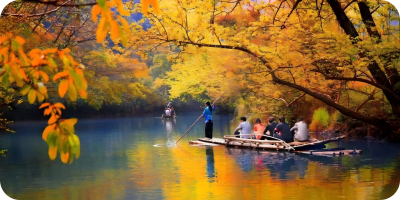 To conclude the journey, we shift the lens from the grandeur of nature to the warmest flickers of human life.
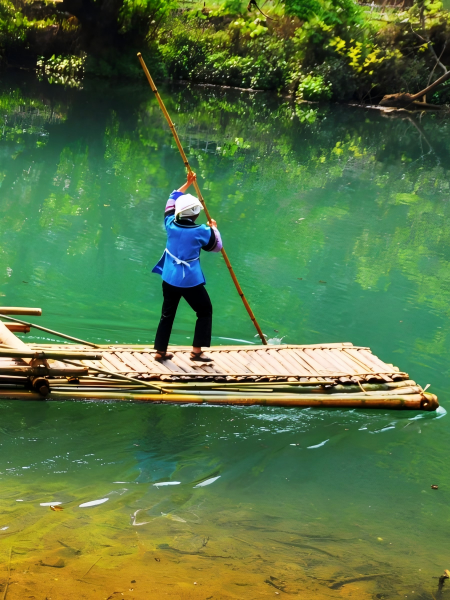
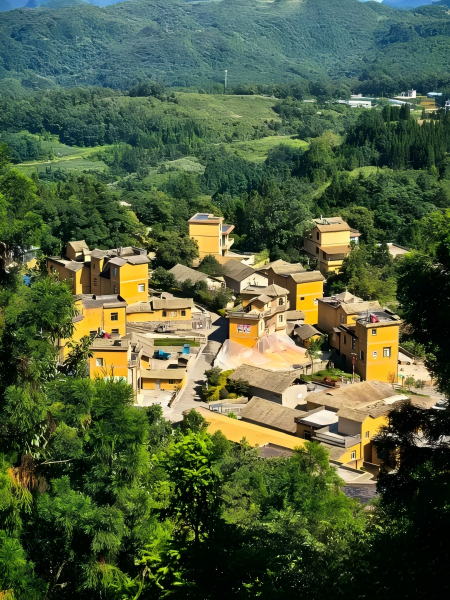
In the Bouyei villages nestled under ancient banyan trees along the Duoyi River, time seems to have stalled amidst the creaking of old waterwheels.
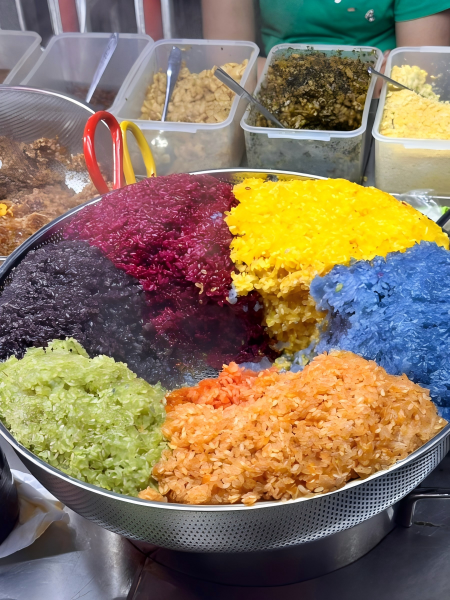
Sitting in a local courtyard, watch a Bouyei mother skillfully boil mountain-gathered herbs, maple leaves, and purple vines into vibrant dyes, staining pure white glutinous rice into five brilliant colors.
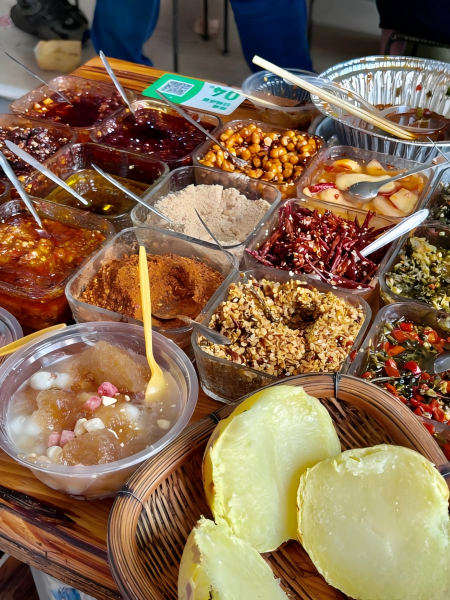
The freshly steamed “Flower Rice” emerges with the delicate scent of the woods. Paired with a river fish grilled over charcoal—crispy on the outside and tender within—every bite is a gift from the sun, the water, and the forest.
In this rustic meal, free from elaborate plating, there is no barrier between guest and host. What you taste is a flavor called “Authenticity.”